
A Rabindra Sangeet can sound like a prayer, a love song, a celebration of the changing seasons, or a quiet reflection on loneliness. Sometimes, it does all of these through a melody that seems deceptively simple.
For generations of Bengalis, the songs of Rabindranath Tagore have been part of ordinary life. They are heard at cultural gatherings, family celebrations, school programs, seasonal festivals, and on the radio. Some are associated with particular moments in Bengal’s calendar, while others have become familiar far beyond the Bengali-speaking world.
Yet Rabindra Sangeet is not one uniform style of music. It is an extensive collection of compositions that brings together poetry, melody, classical traditions, folk influences, and Tagore’s own musical imagination.
For someone encountering Bengali music for the first time, knowing where to begin can make listening considerably more rewarding. Understanding the themes and musical forms behind these songs offers a useful starting point.
What Is Rabindra Sangeet?
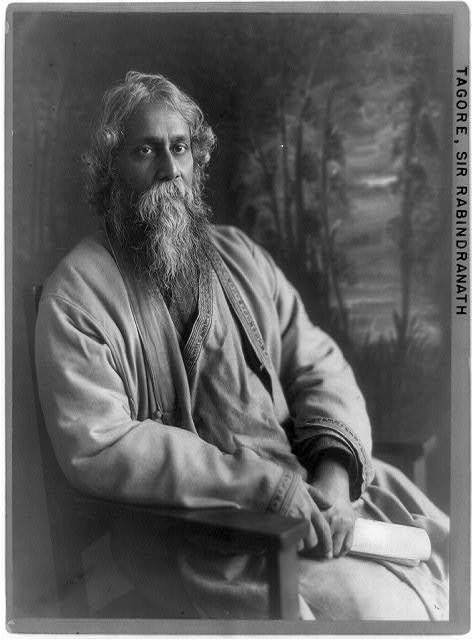
Rabindra Sangeet, also written as Rabindrasangeet, refers to the songs composed by Rabindranath Tagore (1861–1941), the Bengali poet, writer, composer, and Nobel laureate.
Tagore wrote songs throughout much of his life, beginning in his youth and continuing until shortly before his death. His compositions are collected in Gitabitan, a major compilation that organizes the songs primarily by subject rather than by the dates on which they were written.
The collection is commonly associated with approximately 2,232 songs, although different archival counts vary according to editions and which compositions are included. The digital research project Gitabitan documents these variations and provides a detailed classification of the songs.
What distinguishes Rabindra Sangeet is the close relationship between its words and music. The melodies are not simply decorative additions to poems. Tagore conceived language, rhythm, and musical expression together, allowing each to shape the other.
This is one reason why translating the lyrics into another language cannot fully reproduce the experience of listening to the original Bengali compositions.
The Major Themes of Rabindra Sangeet
The thematic arrangement of Gitabitan provides a particularly useful way to understand Tagore’s musical world. Its sections, known as parjaay (thematic divisions), cover different aspects of human experience.
Some of the best-known themes are described below.
1. Puja: Songs of devotion and spiritual reflection
The Puja section contains songs concerned with devotion, faith, surrender, and the relationship between the individual and the divine.
However, these compositions are not limited to conventional religious worship. Many explore the search for meaning, the experience of separation, gratitude, and the desire for a deeper connection with something beyond oneself.
Songs such as Aguner Parashmoni and Jibono Moroner Simana Chharaye offer an introduction to this contemplative side of Tagore’s writing.
For listeners unfamiliar with Bengali, these songs are a good way to appreciate how spiritual ideas can be expressed through restrained language and expressive melodies.
2. Prem: The many expressions of love
Love in Tagore’s songs is not restricted to romantic relationships.
The Prem section explores attraction, longing, separation, emotional intimacy and the complicated feelings that accompany human relationships.
Amaro Porano Jaha Chay and Tumi Robe Nirobe are useful starting points.
The appeal of these compositions lies partly in their emotional restraint. Rather than relying on dramatic declarations, they often communicate affection and longing through suggestion, imagery and musical phrasing.
3. Prakriti: Bengal through its changing seasons
Prakriti means nature. This section brings together songs inspired by landscapes, weather, seasons, and the changing relationship between human emotions and the natural world.
Tagore’s treatment of nature is particularly interesting because it reflects the seasonal experience of Bengal.
The arrival of monsoon rain, the freshness of spring, the brightness of autumn, and the quiet of winter each provide different musical and poetic possibilities.
Akash Bhora Surjo Tara and Aji Jharo Jharo Mukharo Badolo Dine are excellent examples for new listeners.
Prakriti songs also offer an accessible introduction to Bengal’s traditional six-season calendar, which includes summer, monsoon, autumn, late autumn, winter and spring.
4. Swadesh: Songs of the homeland
Swadesh refers to the homeland. These songs express attachment to the land, collective identity, freedom, and social responsibility.
Two particularly significant compositions are Amar Shonar Bangla and Ekla Cholo Re.
The first became the national anthem of Bangladesh, while the latter became widely associated with the spirit of individual courage and perseverance.
Swadesh songs demonstrate that Tagore’s music was not confined to personal emotions or spiritual reflection. It also engaged with the social and political concerns of his time.
5. Bichitra and other thematic sections
Bichitra, meaning diverse or miscellaneous, accommodates compositions that do not fit neatly into some of the more familiar thematic groupings.
The larger Gitabitan classification also includes sections for dramatic compositions, ceremonial songs, dance dramas, and other categories.
This matters because Rabindra Sangeet cannot be adequately understood through just four familiar themes. Its range is considerably wider.
The Musical Forms and Influences Behind Tagore’s Songs
One of the most interesting aspects of Rabindra Sangeet is that it does not belong to a single musical tradition.
Tagore drew inspiration from several established forms, adapting their characteristics to suit his own compositions.
Indian classical music
Hindustani classical music, particularly its ragas and melodic structures, influenced a substantial part of Tagore’s musical work.
A raga is a melodic framework traditionally associated with particular musical movements, moods and sometimes times of performance. Tagore used classical musical ideas without restricting himself to rigid interpretations.
His compositions demonstrate how classical foundations can support songs that remain accessible to a wider audience.
Baul and other Bengali folk traditions
The influence of Bengal’s folk music is equally important.
Baul music, associated with wandering spiritual musicians, explores humanity, love, the body and the search for inner truth. Tagore was particularly interested in its philosophical outlook and musical expression.
He also drew inspiration from other Bengali musical traditions, including Kirtan, a devotional singing tradition, and different forms of regional and light-classical music.
The connection between Baul music and Tagore’s compositions is particularly evident in Ekla Cholo Re, which draws on a Baul musical source.
For readers interested in this connection, Bangalee’s Folk Music section offers a natural starting point for exploring Bengal’s musical traditions beyond Tagore.
Western and Carnatic influences
Tagore’s musical interests extended beyond Bengal and North India.
His exposure to Western music, including Irish and Scottish melodies, influenced some of his compositions. He also engaged with Carnatic music, the classical musical tradition of South India.
The Indian government’s Ministry of Culture has documented these diverse influences in its account of the 2011 UNESCO cultural programme commemorating Tagore.
The result was not a simple combination of different musical styles. Tagore absorbed musical ideas and reshaped them within his own creative language.
Rabindra Sangeet in Bengali Cinema and Popular Culture
Rabindra Sangeet has also had a lasting relationship with Bengali cinema.
Its use in films is not merely a way of introducing a familiar song into a soundtrack. A carefully selected composition can establish a character’s emotional state, communicate an unspoken relationship or connect a scene with a particular cultural setting.
An early example is the 1937 Bengali film Mukti, directed by Pramathesh Barua, with music direction by Pankaj Kumar Mullick. However, the chronology deserves a small qualification: Rabindra Sangeet had already appeared in earlier Tagore-based films, including Natir Puja and Chirakumar Sabha in 1932.
Later filmmakers continued to draw on Tagore’s music. Ritwik Ghatak’s Meghe Dhaka Tara, for instance, features the song Je Rate Mor Duarguli.
The relationship between Bengali cinema and Tagore’s compositions also demonstrates how music can acquire additional meaning through visual storytelling.
For new listeners, hearing a familiar Rabindra Sangeet in a film can be an effective way to discover the music before exploring complete song collections.
Where New Listeners Should Begin: Seven Songs to Try
There is no compulsory order for discovering Rabindra Sangeet. Nevertheless, beginning with songs from different thematic sections provides a better understanding of its range.
Here is a suggested introductory listening list.
| Song | Suggested listening focus |
| Amar Shonar Bangla | Homeland and collective identity |
| Ekla Cholo Re | Courage and individual conviction |
| Amaro Porano Jaha Chay | Romantic longing |
| Tumi Robe Nirobe | Intimacy and emotional expression |
| Akash Bhora Surjo Tara | Nature and the universe |
| Aji Jharo Jharo Mukharo Badolo Dine | Monsoon and seasonal atmosphere |
| Aguner Parashmoni | Devotion and spiritual reflection |
These seven songs are a starting point, not a definitive ranking.
A useful approach is to listen to each composition twice. On the first occasion, pay attention to the melody and overall mood. On the second, follow the lyrics, preferably with a reliable English translation.
You will begin noticing how Tagore’s choice of words, the movement of the melody and the emotional character of the composition work together.
For listening, look for recordings by established Rabindra Sangeet performers and compare interpretations where possible. Differences in voice, tempo, and musical phrasing can make the same composition feel quite different without changing its essential identity.
How to Appreciate Rabindra Sangeet Beyond the Familiar Songs
Once you have become familiar with a few compositions, there are several ways to explore the tradition more closely.
Listen to different performers. Rabindra Sangeet has a distinctive approach to melody and expression, but individual singers bring their own interpretations. Listen to established Bengali artists such as Kanika Bandopadhyay, Debabrata Biswas, Hemanta Mukhopadhyay and Suchitra Mitra.
Explore the original Bengali lyrics. Even a basic understanding of the words can change the listening experience. Tagore’s use of imagery, nature, and emotional expression is an important part of his musical identity.
Discover the seasonal connection. Listen to the Prakriti songs during the monsoon or spring. The relationship between music and the Bengali calendar becomes easier to appreciate when you understand the seasonal references.
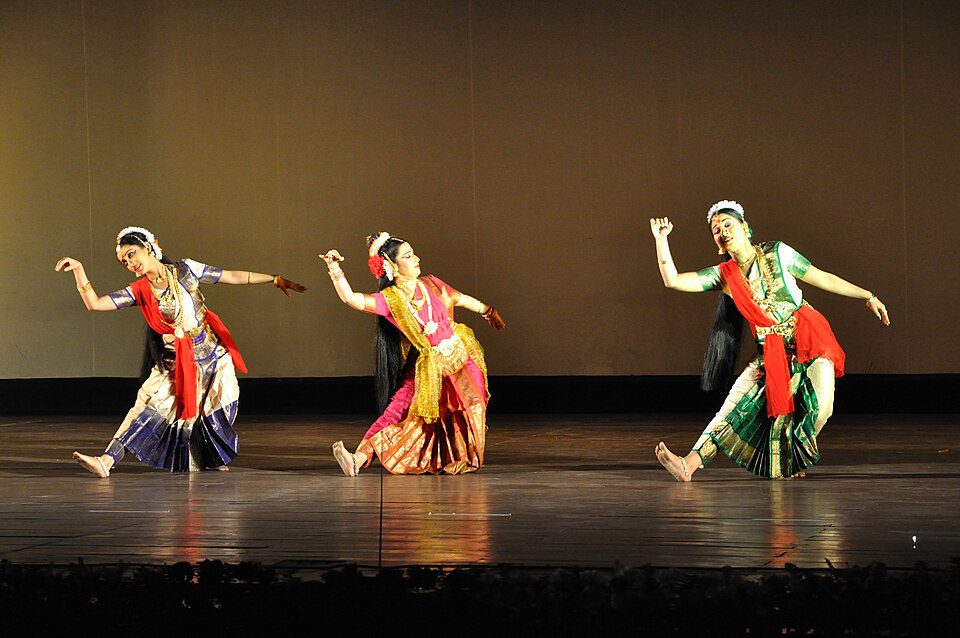
Explore live performances. Cultural programmes at Santiniketan and other parts of West Bengal offer opportunities to experience Rabindra Sangeet as a shared musical tradition. These performances also introduce listeners to group singing, choreography, and the conventions of Rabindra Nritya, the dance tradition associated with Tagore’s compositions.
Where to Find Reliable Rabindra Sangeet Resources
A few online resources can help listeners move beyond scattered recordings:
- Gitabitan offers a searchable collection of Tagore’s songs, thematic classifications, and musical information.
- Visva-Bharati is an important institutional resource for understanding Tagore’s educational and cultural legacy. Its Rabindra-Bhavana archives preserve manuscripts, correspondence, photographs, and other original materials.
- Rabindra-Bhavana Archives provides information about archival holdings and research access.
For international listeners, translated lyrics can be particularly useful. However, translations should be treated as aids to understanding rather than substitutes for the original Bengali words.
A Musical Tradition That Continues to Be Reinterpreted
Rabindra Sangeet has survived changes in recording technology, performance styles, popular taste and the way people discover music.
Its presence in Bengal is particularly visible during cultural celebrations, academic programmes and seasonal gatherings. It also continues to reach listeners in Bangladesh and Bengali communities across the world.
Not every listener approaches Tagore’s music in the same way. Some are drawn to its poetry, others to its melodies, while many discover it through family traditions or Bengali cinema.
That variety is part of what makes the collection worth exploring.
For someone new to Bengali music, the best starting point is not an attempt to understand every composition or musical influence. It is simply to choose a song, listen carefully, and follow the subject that interests you.
Deeper appreciation can come gradually, one composition at a time.
Do you like the piece? Please comment.