
Feluda’s Kolkata is not a city of imaginary streets and mysterious buildings. It is a city of familiar addresses, old neighborhoods, bookshops, cemeteries, museums, and restaurants. Some of these places still exist. Others have changed so much that readers might struggle to recognize them.
For generations of Bengali readers, 21 Rajani Sen Road has been as memorable as 221B Baker Street is to readers of Sherlock Holmes. It is the fictional home of Prodosh Chandra Mitter, better known as Feluda, Satyajit Ray’s famous private detective.
But Feluda’s connection with Kolkata goes much further than one fictional address.
Ray used real streets and familiar corners of the city to build his detective’s world. He brought his characters into places that readers could visit, recognize, and sometimes explore for themselves.
Today, following Feluda’s footsteps offers an unusual way to discover Kolkata. It is part literary trail, part city history, and part detective exercise. And, unlike some of Feluda’s investigations, you do not need to solve a murder to enjoy it.
How Satyajit Ray Built Feluda’s Kolkata
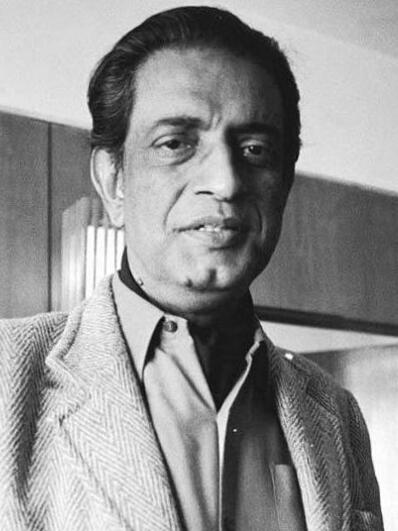
Satyajit Ray began writing Feluda stories in 1965. The first story, Feludar Goyendagiri, appeared in the children’s magazine Sandesh. The series eventually grew to include 35 stories and novels.
Ray had a particular advantage when creating Feluda’s world. He knew Kolkata intimately.
His family had a long association with Bengali literature, printing, and publishing. His grandfather, Upendrakishore Ray Chowdhury, and father, Sukumar Ray, were both important figures in Bengali children’s literature.
Ray himself had grown up around books, illustrations, printing presses, and creative people. These influences found their way into his writing.
Feluda’s world reflects this background. The detective reads extensively, appreciates art and history, notices small details, and enjoys intellectual challenges. His cousin Topshe, whose full name is Tapesh Ranjan Mitra, narrates the adventures.
Then there is Lalmohan Ganguly, better known as Jatayu. The crime writer brings humor into the stories, often with his imaginative titles and occasional misunderstandings.
Kolkata provides the setting that connects these personalities. Ray did not need to invent an entirely new city. He could simply use the one outside his window.
The result is a fictional world that feels remarkably close to real life.
7 Real Kolkata Places Associated with Feluda
The following locations offer a good starting point for anyone interested in exploring Feluda’s Kolkata. Some appear directly in the stories. Others are connected with Ray’s life and the background of his characters.
1. 21 Rajani Sen Road: Feluda’s Fictional Home
This is perhaps the most famous fictional address in Bengali detective literature.
Feluda lives at 21 Rajani Sen Road in South Kolkata, with his fatherless cousin Topshe and his uncle.
The interesting part is that Rajani Sen Road is real, but the famous house number is fictional.
Visitors looking for number 21 will find that the actual numbering does not match Ray’s description. There is a 21B address, which has occasionally added to the confusion.
Ray placed Feluda in this neighborhood because he knew the area well. He had lived at Lake Temple Road, not far away, during the years when he was writing and making some of his best-known films.
It is a small detail, but it tells us something about Ray’s approach. He gave his detective a believable address in a familiar part of the city.
2. 100 Garpar Road: Jatayu’s Neighborhood
North Kolkata enters Feluda’s world through Lalmohan Ganguly.
Garpar Road is associated with Jatayu’s fictional home. It also has a much deeper connection with the Ray family.
Satyajit Ray was born at 100 Garpar Road in 1921 and lived there during his early childhood. The house was built by his grandfather, Upendrakishore.
The property later became associated with the Athenaeum Institution.
This address connects three generations of the Ray family with Feluda’s literary universe. It is also a reminder that Bengali publishing history and detective fiction share some interesting roots.
Jatayu’s association with Garpar makes particular sense when you consider how much of Ray’s own childhood was connected with the locality.
3. Indian Museum: The Jahangir Connection
The Indian Museum plays an important role in Jahangirer Swarnamudra.
The story revolves around a collection of gold coins associated with Mughal emperor Jahangir. One of the twelve coins goes missing, bringing Feluda into the investigation.
The museum’s Mughal art gallery and coin collection are particularly relevant to this adventure.
In January 2023, a Feluda-themed heritage walk organised by the Bengal Chamber of Commerce and Industry, together with Walk Calcutta Walk, included the museum. Participants followed clues connected with the story and visited the relevant galleries.
It is a particularly enjoyable connection for readers because the museum’s real collections help bring the fictional mystery to life.
4. South Park Street Cemetery: The Setting of Gorosthane Sabdhan
If there is one Kolkata location that Feluda fans associate with an atmosphere of mystery, it is the South Park Street Cemetery.
The cemetery is the principal setting of Gorosthane Sabdhan, published in 1978.
The story brings together colonial history, old graves, unusual clues, and a rare antique. Ray uses the cemetery’s historic monuments to create an atmosphere that is quite different from the usual residential Kolkata of Feluda.
The real cemetery dates back to the eighteenth century. Its tombs and memorials reflect the architectural styles and social history of colonial Calcutta.
For a Feluda enthusiast, it is one of the most rewarding locations to visit. The real place has enough history of its own without needing any fictional additions.
5. St. John’s Church: Another Piece of Colonial Kolkata
Another important location associated with Gorosthane Sabdhan is St. John’s Church.
Built in the eighteenth century, the church is one of Kolkata’s historic religious buildings.
Its surroundings contain several memorials and historical structures connected with the city’s colonial past.
The church is worth including in a Feluda-themed heritage walk because it helps readers understand the historical environment Ray drew upon when writing his mysteries.
It also shows how Ray used real historical locations rather than relying entirely on imaginary settings.
6. Marble Palace: A Reference in Badshahi Angti
The Marble Palace is another interesting stop for readers of Badshahi Angti.
Built by Raja Rajendra Mullick in the nineteenth century, the mansion is known for its extensive marble decoration, European sculptures, paintings, and collections.
The palace also became known for its private zoo.
Ray refers to Rajendra Mullick and his zoo in the story, connecting a real Kolkata landmark with Feluda’s fictional investigation.
The building is not simply a literary reference. It is also an important part of the city’s architectural and collecting history.
Visitors should check access arrangements before planning a visit, as entry to the property is subject to restrictions.
7. New Market: The Kolkata That Has Changed
New Market is another familiar part of Feluda’s Kolkata.
Ray mentions the market in stories such as Nitaibabur Moyna and Jehangirer Swarnamudra.
The market once had an aviary section and bird shops, details that appear in Ray’s descriptions. Those shops and some of the old meeting points mentioned in the stories have since disappeared or changed.
This is perhaps one of the most interesting aspects of reading Feluda today.
The stories preserve details of a Kolkata that no longer exists in quite the same form. A reader who visits New Market can still experience its crowded passages and busy atmosphere, but some of the smaller details that Ray recorded belong to the city’s past.
Other Places Worth Knowing: Ray’s Own Kolkata
Feluda’s fictional world and Satyajit Ray’s personal history often overlap. A few additional addresses help complete the picture.
- 3 Lake Temple Road: Ray lived here for approximately eleven years, from 1959 to 1970. He wrote Feluda stories here and worked on several films.
- Bishop Lefroy Road: Ray moved to this address in the 1970s and lived here until his death in 1992. It is an important part of his personal and creative history.
- Pretoria Street: Feluda is mugged here in Baksho Rahasya. The location is close to Ray’s former residence.
- Lovelock Place: Associated with Sheyal Debota Rahasya. Ray had also worked at an editing studio in this locality.
These addresses show how closely Ray’s fictional Kolkata was connected with the city he actually inhabited.
Can You Actually Follow Feluda’s Kolkata Today?
Yes. In fact, organized Feluda-themed heritage walks have already demonstrated the appeal of this idea.
In January 2023, the Bengal Chamber of Commerce and Industry partnered with Walk Calcutta Walk to organize a tour called Feluda—The Nostalgia. The route covered Garpar, Marble Palace, Indian Museum, Bishop Lefroy Road, and Rajani Sen Road, among other locations.
Participants were given riddles and questions based on Feluda stories. The idea was to explore the city while revisiting familiar literary references.
It is an interesting way to approach Kolkata’s heritage. Instead of following a conventional sightseeing itinerary, visitors can explore the city through the eyes of a fictional detective.
If you plan to make your own Feluda trail, keep a few things in mind:
- Start with Garpar Road if you want to understand the Ray family’s North Kolkata connection.
- Visit the Indian Museum and South Park Street Cemetery for the strongest links with specific Feluda mysteries.
- Include Rajani Sen Road to see the neighborhood behind Feluda’s fictional home.
- Remember that Ray’s former residences are private properties. Do not assume that you can enter them.
- Check visiting arrangements before going to Marble Palace, museums, and historic religious sites.
You do not have to visit every location in one day. A couple of carefully planned walks will be much more enjoyable.
Why Feluda’s Kolkata Still Matters to Bengali Literature
A detective story can survive through its puzzles, characters, and unexpected endings. But Feluda offers something else as well: a record of Kolkata.
Ray captured its streets, neighborhoods, shops, institutions, and changing social landscape. His descriptions preserve details that might otherwise have disappeared from everyday memory.
For younger readers, the stories offer an introduction to a city they may know only through its modern buildings and busy roads. For older readers, they bring back memories of a different Kolkata.
There is also something special about the way Ray connected fiction with real geography. You can stand outside the Indian Museum and think about Jahangirer Swarnamudra. You can walk through the South Park Street Cemetery and recall Gorosthane Sabdhan. You can visit Garpar and understand why Jatayu’s neighborhood feels so connected to the Ray family.
And then there is 21 Rajani Sen Road.
The house may be fictional, but its place in Bengali literary imagination is very real.
Perhaps that is the best reason to explore Feluda’s Kolkata. It allows us to read the city as closely as Feluda reads a crime scene. Sometimes, all it takes is a little observation.