
There is something interesting about India’s choice of 14 November as Children’s Day. The date is not simply a tribute to a former prime minister. It also reflects an idea that Jawaharlal Nehru repeatedly spoke about: the future of a country depends on how it treats its children.
Every year, schools across West Bengal and the rest of India celebrate the occasion with cultural programs, games, competitions, and special activities. Children receive sweets and gifts, teachers organize performances, and classrooms take on a slightly different atmosphere.
Known as Bal Diwas, Children’s Day is observed on 14 November, the birth anniversary of India’s first prime minister, Jawaharlal Nehru.
But how did his birthday become Children’s Day? Was it decided only after his death? And what does Nehru’s legacy have to do with the welfare of children today?
The history is more interesting than the usual school assembly explanation.
Why Is Children’s Day Celebrated on 14 November in India?
India celebrates Children’s Day on 14 November because it is the birth anniversary of Jawaharlal Nehru, who was born on 14 November 1889 in Allahabad, now Prayagraj, Uttar Pradesh.
Nehru served as India’s first prime minister from 1947 until his death on 27 May 1964. He was also an important leader of the Indian freedom movement.
His affection for children became widely known. Children fondly called him Chacha Nehru, meaning Uncle Nehru. The name reflected the friendly relationship he was believed to share with young people.
However, there is an interesting detail that often gets missed in the popular account.
Children’s Day was already being celebrated on 14 November during Nehru’s lifetime.
Records in the Nehru Archive show that the date had become associated with Children’s Day by 1952. In a letter dated 18 November 1952 to his sister, Vijayalakshmi Pandit, Nehru mentioned that his birthday had become firmly established as Children’s Day.
He was not entirely comfortable with the personal attention, though.
In November 1957, Nehru expressed his preference that the occasion should be treated as Children’s Day rather than as a celebration of his birthday. He wanted the focus to remain on children.
This is an important distinction. The association between 14 November and Children’s Day did not begin suddenly after his death in 1964. It was already established several years earlier.
The date gradually became a national tradition in his memory.
Who Was Jawaharlal Nehru, and Why Was He Associated with Children?
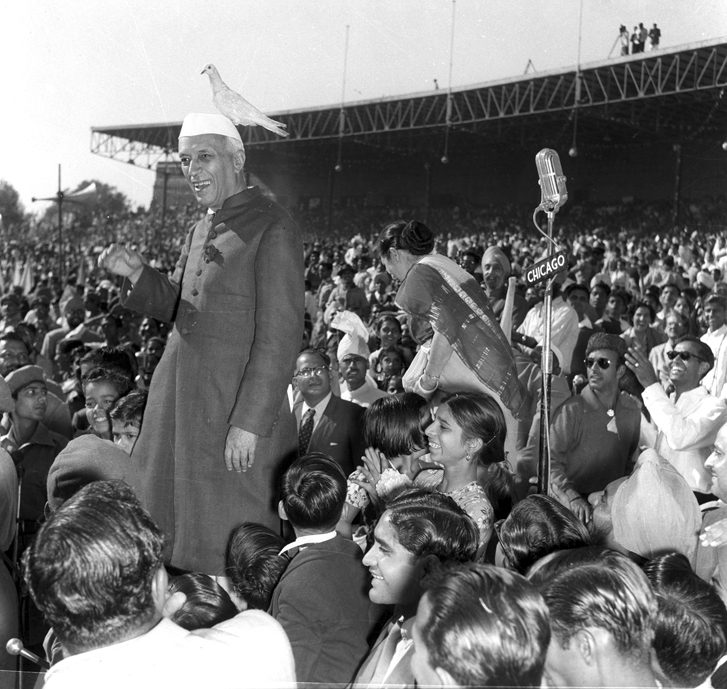
Jawaharlal Nehru was born into a prosperous Kashmiri family. His father, Motilal Nehru, was a prominent lawyer and political leader.
He received his early education at home before travelling to England. He studied at Harrow, Trinity College, Cambridge, and the Inner Temple in London.
After returning to India, he became involved in the freedom movement and eventually emerged as one of its leading figures.
As India’s first prime minister, Nehru played a major role in shaping the country’s early political, economic, and educational institutions.
His interest in children was closely connected with his broader vision for India’s future. He believed education, scientific thinking, and opportunities for young people were essential for national development.
Nehru also supported the development of higher education and scientific institutions. During his years in office, institutions such as the Indian Institutes of Technology and the All India Institute of Medical Sciences were established.
His association with children was not limited to speeches and public appearances. He regularly met young people and participated in Children’s Day celebrations.
An interesting example comes from 14 November 1963, when a large gathering of children took place at India Gate in New Delhi. Thousands of children attended the celebrations, singing, dancing, and greeting Nehru.
The event included a children’s fair, and Nehru released two white pigeons as symbols of peace.
The occasion gives us a glimpse of how Children’s Day was celebrated during his lifetime.
Why Is Children’s Day Important Beyond Nehru’s Birthday?
It is easy to associate Children’s Day with school celebrations. But its purpose goes much further.
A child needs more than a good school or a comfortable home. Childhood also requires proper nutrition, healthcare, safety, emotional support, opportunities to play, and the freedom to develop individual interests.
These are not luxuries. They are essential parts of a healthy childhood.
Children’s Day provides an opportunity to discuss some of these important issues.
Education for every child
Education remains one of the most important foundations of childhood.
India’s Right to Education Act, 2009, provides for free and compulsory elementary education for children between six and fourteen years of age.
Article 21A of the Indian Constitution recognizes education as a fundamental right for this age group.
However, access to education involves more than enrolling children in schools. Regular attendance, teaching quality, safe classrooms, and equal opportunities are equally important.
Protection and child welfare
Children need protection from exploitation, abuse, neglect, and child labour.
Their physical and emotional development also depends on access to healthcare, nutritious food and a safe environment.
Child welfare is a shared responsibility involving families, schools, communities, and government institutions.
The right to play and express themselves
Not every childhood activity needs to have an examination, competition, or career objective attached to it.
Children need time to play, explore, create, make friends, and discover their interests.
They should also have opportunities to express their opinions and participate in decisions that affect their lives.
These ideas are closely connected with the United Nations Convention on the Rights of the Child, adopted on 20 November 1989.
How Is Children’s Day Celebrated in West Bengal?
In West Bengal, Children’s Day is commonly celebrated in schools through cultural programs and activities involving students and teachers.
The celebrations vary from institution to institution, but some familiar activities include:
- Singing, dancing, and recitation competitions.
- Drawing, painting, and craft activities.
- Sports and indoor games.
- Speeches about Nehru and the importance of education.
- Distribution of chocolates, sweets, and small gifts.
- Special performances organized by teachers.
In Bengali schools, cultural activities often include recitation, songs, and performances that reflect the state’s strong literary and artistic traditions.
For younger students, the occasion can be particularly enjoyable. Teachers sometimes take a break from regular classroom routines and participate in games and performances.
However, Children’s Day is not limited to schools. Child welfare organizations, community groups, and institutions also organize activities for children, including those who may not have access to the same opportunities as their peers.
The celebrations are a reminder that every child deserves attention, encouragement, and a chance to enjoy childhood.
Children’s Day in India and World Children’s Day: What Is the Difference?
India’s Children’s Day and World Children’s Day are observed on different dates.
The two observances have different historical backgrounds.
| Occasion | Date | Significance |
| Children’s Day in India | 14 November | Nehru’s birth anniversary and the celebration of children’s welfare |
| World Children’s Day | 20 November | Commemorates the adoption of the UN Declaration of the Rights of the Child in 1959 and the Convention on the Rights of the Child in 1989 |
The United Nations established Universal Children’s Day in 1954. It is now widely observed on 20 November.
The date is significant because the UN General Assembly adopted the Declaration of the Rights of the Child on 20 November 1959 and the Convention on the Rights of the Child on the same date in 1989.
India observes its National Children’s Day on 14 November, while UNICEF India organises activities leading up to World Children’s Day.
What Should Children’s Day Mean in 2026?
Children’s Day 2026 falls on Saturday, 14 November.
The occasion will bring the familiar celebrations back to schools and communities across India. But it is also worth looking beyond the festivities.
Children today are growing up in a world very different from the one Nehru knew. Digital technology, social media, academic competition, and changing family structures have created new opportunities as well as new challenges.
Many children have access to information and learning resources that previous generations could hardly imagine. At the same time, questions about online safety, excessive screen time, academic pressure, and emotional well-being deserve attention.
There are also longstanding concerns that remain unresolved. Not every child has access to quality education, adequate nutrition, healthcare, or a safe home.
These challenges exist in Bengal as much as in other parts of India. The experiences of a child growing up in Kolkata may be very different from those of a child in a remote village in Purulia, Murshidabad, or the Sundarbans.
A meaningful Children’s Day must recognize these differences.
Perhaps the best way to observe the occasion is to give children something more valuable than a day of sweets and celebrations: the opportunity to be heard, learn without fear, play freely, and grow with dignity.
Nehru’s birthday gives India a reason to celebrate children. What we do for them throughout the year gives that celebration its real meaning.