
There is something rather amusing about Shukto. A Bengali meal can have fish curry, kosha mangsho, luchi, and several other dishes waiting in the wings, but traditionally, lunch often begins with a bowl of vegetables that tastes bitter.
And nobody really complains.
Shukto (শুক্তো) is one of the most distinctive dishes in Bengali cooking. It is a mildly bitter, creamy vegetable preparation, usually served at the beginning of a traditional Bengali meal. It is neither an ordinary vegetable curry nor a dish that tries to impress with fiery spices. Its appeal lies in the combination of vegetables, subtle seasoning, and a flavour that takes a little getting used to.
For many Bengali households, Shukto is an essential part of a traditional lunch. For others, it is an occasional preparation associated with family gatherings and elaborate meals. Either way, it deserves attention as an important part of Bengal’s culinary tradition.
Let’s look at what goes into Bengali Shukto, how it is prepared, and why this unusual dish gets the first place at the dining table.
What Exactly Is Bengali Shukto?

Shukto is a traditional Bengali mixed vegetable preparation known for its characteristic bitter taste and creamy consistency. It is generally served as the first course of a Bengali lunch, before rice, accompanied by dal, vegetables, fish, or meat.
The ingredients can vary from household to household, but some commonly used vegetables include:
- Bitter gourd (uchhe or korola)
- Raw banana (kanchkola)
- Drumsticks (sojne data)
- Potato (alu)
- Sweet potato (mishti alu)
- Raw papaya (pepe)
- Flat beans or broad beans (shim)
The dish is usually prepared with a combination of spices and a mildly creamy gravy. Milk, mustard paste, or poppy seed paste may be used depending on the recipe.
One ingredient that gives traditional Shukto its distinctive Bengali character is radhuni (রাধুনি). It has a strong, aromatic flavor and is particularly associated with Bengali cooking.
Shukto is not necessarily the same in every Bengali kitchen. Some families prefer it creamier, while others like a thinner gravy. The selection of vegetables and the degree of bitterness also vary.
That is part of its charm. There is no single household recipe that represents every version of Shukto.
Why Is Shukto Served at the Beginning of a Bengali Meal?
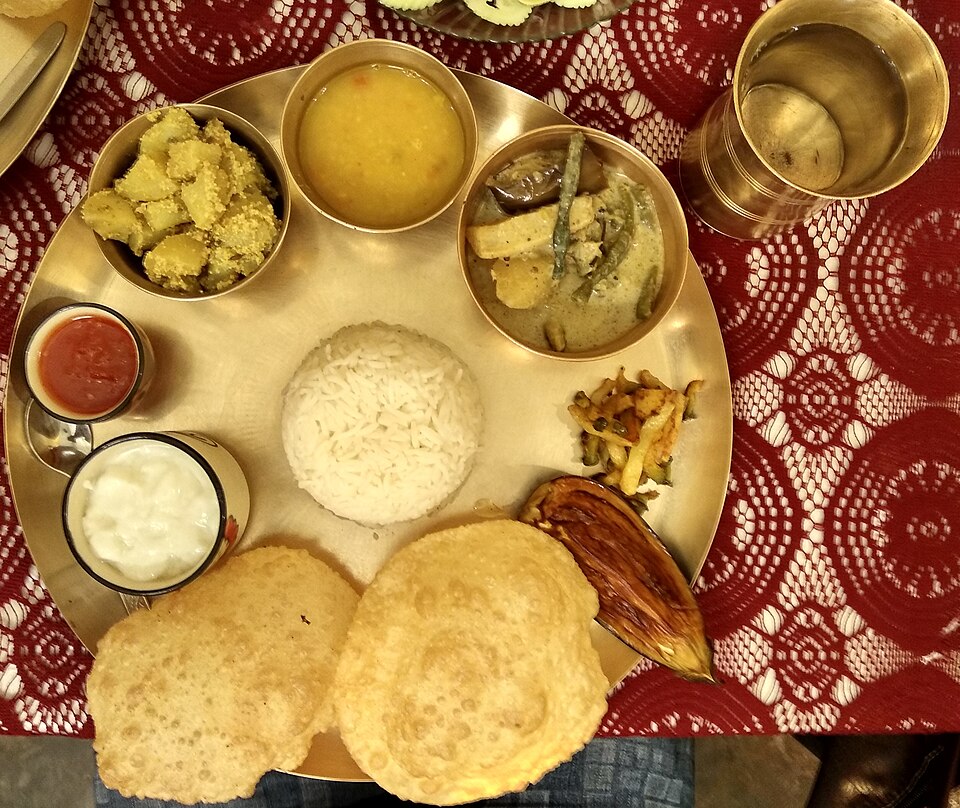
The tradition of starting a Bengali meal with something bitter is closely associated with the traditional order of eating in Bengal.
A traditional Bengali lunch is generally served course by course. Instead of placing everything on the plate at once, different preparations arrive in a particular sequence. Bitter vegetables come early, followed by other vegetable dishes, dal, fish or meat preparations, chutney, and sweets.
Shukto occupies an important place in this arrangement.
There is also an interesting distinction worth knowing. In some traditional meals, a small serving of fried bitter vegetables, such as uchhe bhaja (fried bitter gourd), comes before Shukto. In other households, Shukto itself serves as the opening bitter course.
Why begin with bitterness?
Traditional food practices and Ayurvedic dietary ideas have long associated bitter foods with digestion and appetite. The idea of eating bitter preparations before richer dishes became part of Bengal’s culinary culture.
However, the modern scientific claim that eating Shukto first necessarily improves digestion should not be taken as established medical fact.
There is another explanation that makes sense from a culinary perspective. The relatively mild, bitter taste provides a contrast to the richer, more heavily seasoned dishes that follow.
And perhaps there is a little Bengali practicality involved too. If you have a plate full of delicious fish curry waiting, eating your vegetables first is probably a sensible arrangement!
The History of Shukto: Where Did It Come From?
Shukto has a long history in Bengali food literature, although its precise origin remains uncertain.
References to bitter preparations appear in medieval Bengali literary works. The 16th-century Chandimangal by Mukundaram Chakrabarti, for instance, contains descriptions of Shukto-like preparations featuring vegetables such as brinjal, pumpkin, and raw banana.
Another important literary reference appears in Chaitanya Charitamrita, associated with Krishnadasa Kaviraja. It mentions shukuta, referring to dried bitter leaves, particularly jute leaves.
Food historians have explored whether these earlier preparations developed into the Shukto familiar today. There are also theories suggesting Portuguese culinary influence on certain methods of preparing the dish.
However, there is insufficient evidence to identify one definitive origin story. The dish appears to have evolved through Bengal’s changing food habits, ingredients and cooking practices.
One particularly interesting aspect is that Shukto is sometimes described not as a single fixed recipe but as a style of cooking bitter vegetables.
This helps explain why recipes differ so much between Bengali households.
Traditional Bengali Shukto Ingredients
A good Shukto depends on balancing different vegetables and flavors. Every ingredient has a role.
Here are some commonly used ingredients:
| Ingredient | Bengali name | Purpose |
| Bitter gourd | Uchhe/Korola | Provides the characteristic bitterness |
| Raw banana | Kanchkola | Adds body and texture |
| Drumsticks | Sojne data | Adds a distinct vegetable flavour |
| Potato | Alu | Gives substance |
| Brinjal | Begun | Softens during cooking |
| Lentil dumplings | Bori | Adds texture |
| Milk | Dudh | Creates a mild, creamy gravy |
| Radhuni | Radhuni | Adds a distinctive aroma |
| Ginger | Ada | Adds warmth and fragrance |
| Ghee | Ghee | Provides a finishing aroma |
Not every recipe uses all these ingredients.
What Makes Radhuni Special?
Radhuni is one of the most recognisable spices in traditional Bengali cooking. Its small seeds have a distinctive, strong aroma.
It is sometimes confused with ajwain because of their appearance, but they are different spices.
In Shukto, radhuni may be used for tempering or as part of the spice mixture. Some recipes also use panch phoron, the familiar Bengali five-spice blend.
The exact combination depends on the household recipe.
How to Prepare Traditional Bengali Shukto
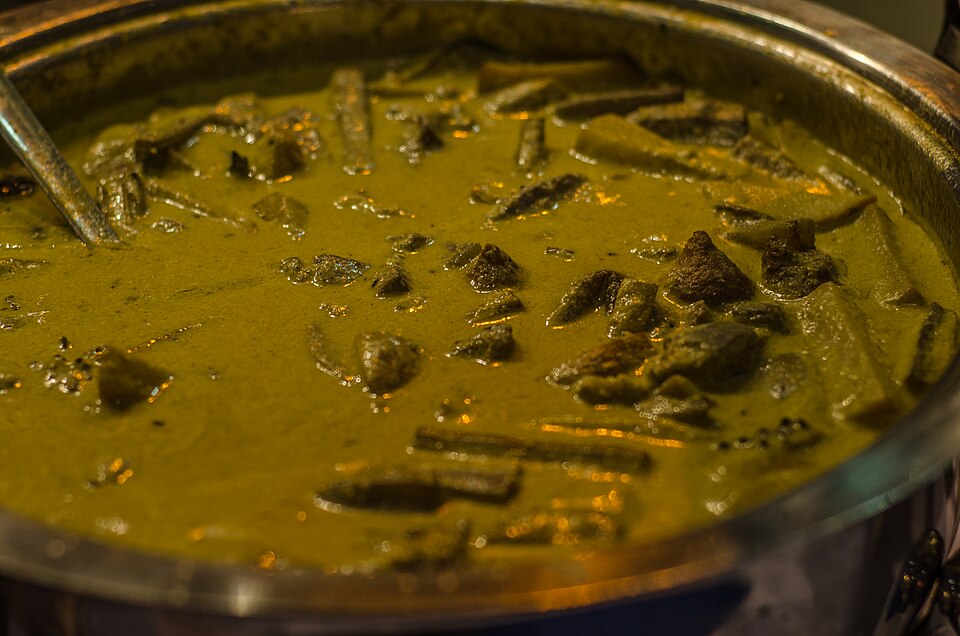
There are several ways to prepare Shukto. The following is a practical home-style version using commonly available ingredients.
Preparation time: 20 minutes
Cooking time: 30–35 minutes
Serves: 4
Ingredients
- 1 medium bitter gourd, sliced lengthwise
- 1 raw banana, peeled and cut into pieces
- 1 potato, cut into long pieces
- 1 small brinjal, cut into pieces
- 2 drumsticks, cut into sections
- ½ cup fried bori
- ½ teaspoon radhuni
- ½ teaspoon panch phoron
- 1 tablespoon ginger paste
- ½ cup milk
- 2 tablespoons mustard oil
- 1 teaspoon ghee
- Salt and a little sugar to taste
- Water as required
Preparation Method
- Heat mustard oil in a kadai. Lightly fry the bitter gourd slices and keep them aside. Fry the bori until golden and remove.
- In the same kadai, add radhuni and panch phoron. Allow the spices to release their aroma.
- Add ginger paste, followed by the raw banana, potato, and drumsticks. Stir gently.
- Add salt and a little water. Cover and cook until the vegetables are nearly tender.
- Add the brinjal and previously fried bitter gourd. Cook gently.
- Pour in the milk and add a small amount of sugar to balance the bitterness.
- Add the fried bori and simmer until the vegetables are completely cooked.
- Finish with ghee and turn off the heat.
Serve warm with plain steamed rice.
A small cooking tip: Do not overcook the vegetables. Shukto should have identifiable pieces of vegetables rather than become a mashed mixture. Also, avoid adding too much sugar. The bitterness should remain noticeable.
Different Versions of Shukto Across Bengali Kitchens
There is no universal recipe for Shukto.
Some families prepare Dudh Shukto, which uses milk to create a mild, creamy gravy. Others prefer a preparation with mustard or poppy seed paste.
The selection of vegetables also changes. Seasonal availability, regional preferences and family traditions influence the final dish.
Some versions use bori generously, while others keep the preparation relatively simple.
Shukto also has a place in traditional vegetarian cooking. It is generally prepared without onion and garlic in many household recipes, although individual variations exist.
Interestingly, older Bengali food literature records several different bitter vegetable preparations. This suggests that the culinary idea behind Shukto was never restricted to one rigid ingredient list.
Shukto’s Place in a Traditional Bengali Lunch
A traditional Bengali meal has a particular rhythm.
A typical elaborate lunch may include:
- Shukto or another bitter preparation.
- Shak bhaja (fried leafy greens).
- Dal with vegetable or fish fritters.
- Vegetable preparations.
- Fish curry or jhol.
- Meat, as served.
- Chutney.
- Papad and sweets.
The exact sequence and number of courses vary between households and occasions.
Shukto’s position at the beginning gives it a special identity. It is not necessarily the most exciting dish on the table for everyone, particularly those who dislike bitter vegetables. But it represents a cooking tradition in which flavor, sequence, and balance matter as much as the individual dishes.
And that is perhaps why Shukto continues to appear on Bengali lunch tables. It does not need to compete with the fish curry or the sweets. It has its own place.
The next time someone serves you Shukto, resist the temptation to skip straight to the fish. Take a little rice, add a spoonful of Shukto, and give it a proper chance.
You might discover that a Bengali lunch begins with a rather interesting lesson: sometimes, a little bitterness makes the rest of the meal taste even better.